
Dog nail trimming usually starts with stress, hesitation, and a bit of confusion from both sides. The dog pulls the paw away, looks unsure, sometimes even hides the moment the clippers show up. That reaction is normal.
Nothing is wrong with the dog. Nothing is wrong with the owner either.
It simply means the dog has not learned yet that nail trimming is safe.
The whole point of dog nail trimming is not to force anything. It is to slowly teach the dog, step by step, that paws being touched, held, and trimmed is just part of normal life.
And here is the truth most people realize later: nail trimming is not hard because of the nails. It is hard because of fear.
Once that fear goes down, everything becomes easier.
Long nails are not just about looks. They affect walking, posture, and comfort. In bad cases, curved nails start growing into the paw, and that is when real pain begins.
So yes, this small habit matters more than it looks.
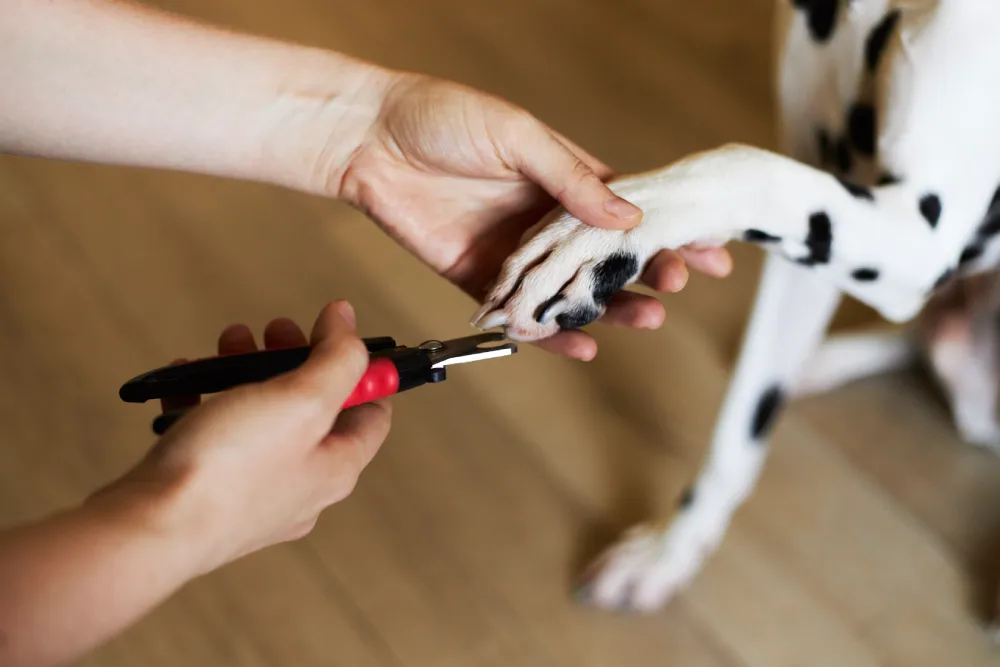
Dog Nails Are Not Just Nails, They Affect the Whole Body
When nails get long, the whole way a dog moves changes.
It does not happen suddenly. It happens slowly.
You start noticing small things:
- The clicking sound on the floor becomes louder
- The dog starts walking carefully, like unsure
- Running becomes less frequent
- Slipping starts happening on tiles
- Paw licking becomes more common
And most people ignore it at first because it looks small.
But over time, long nails can actually push pressure into joints and affect comfort.
That is exactly why dog nail trimming is not optional care. It is regular maintenance, just like feeding or walking.
How Often Should Dog Nails Be Trimmed?
People always ask how often to trim dog nails or how often to clip dog nails, and the answer is simpler than expected.
It depends on lifestyle more than breed.
Here is how it usually goes:
- If the dog stays mostly indoors → trim every 3–4 weeks
- If the dog walks a lot outside → every 4–6 weeks
- If it is a puppy → every 1–2 weeks
- If it is an older dog → around every 3 weeks
And here is the easiest check anyone can do:
If nails are clicking on the floor, they are already too long.
No need to overthink it.
With regular dog nail trimming, trimming becomes easier because nails stop getting out of control.
When to Trim Puppy Nails Without Stress
One of the most common questions is when to trim puppy nails, especially for first-time dog owners.
The answer is simple: start early, but keep it very light.
At the beginning, it is not about cutting properly. It is about getting the puppy used to the feeling.
Think of it like this:
The puppy is learning, not being groomed.
So what usually works best:
- Just touch the paws regularly
- Let the puppy see and smell the clippers
- Trim only tiny tips, not full nails
- Keep everything very short
- End every session with a reward
That early dog nail trimming builds trust that lasts for years.
If the start is calm, later grooming becomes much easier.
Clear Signs Nails Are Getting Too Long
Most people don’t realize nails are overgrown until it becomes obvious.
But the dog gives signs early. You just have to notice them.
Clicking Sound While Walking
This is usually the first clue.
Nails Curling Down
This is where curved nails start becoming risky.
Walking Looks Slightly Off
The dog may adjust posture without showing pain.
Nails Touch the Floor When Standing Still
That means they are too long already.
More Paw Licking Than Usual
Often a sign of discomfort or pressure.
At this stage, dog nail trimming should not be delayed.
Choosing Dog Nail Clippers That Actually Help
A big reason trimming feels difficult is wrong tools.
Good dog nail clippers make a huge difference.
There are a few common types:
- Scissor type → better for medium and large dogs
- Guillotine type → easier for small dogs
- Grinder → helps smooth edges after trimming
But here is something important most people miss:
Sharpness matters more than type.
Dull clippers crush the nail instead of cutting it cleanly, and that makes dogs uncomfortable.
How to Use Dog Nail Clippers Without Fear
Many people search how to use dog nail clippers because they are nervous about hurting their dog.
That fear is understandable.
The safe way is slow and simple:
Start by sitting somewhere quiet. No noise, no rush.
Then:
- Hold the paw gently, like holding something fragile
- Look at the nail carefully before cutting
- Only trim a very small piece at a time
- Stop before reaching the sensitive part inside
- Give a treat after each nail or even each step
That is what real dog nail trimming looks like in practice.
And yes, it is completely fine to do just one paw and stop.
No pressure needed.
Overgrown Nails Need a Slow Approach, Not a Fast Fix
When nails are extremely long, many people search overgrown how to cut dog nails and feel confused.
The biggest mistake here is trying to fix everything in one go.
That usually leads to pain and fear.
Instead, what works better is:
- Trim a tiny bit each week
- Keep sessions short
- Use strong lighting so everything is visible
- Go slow even if progress feels small
- Ask a groomer if things feel too difficult
Over time, the nail slowly returns to normal.
That is how safe dog nail trimming works with overgrown cases.
Dog Dew Claw Trim Often Gets Ignored
The dog dew claw trim is something many owners forget completely.
But it matters.
Dew claws do not touch the ground much, so they do not wear down naturally.
That means they can grow long and start curling into the skin.
So it helps to:
- Check them once a week
- Trim slowly and carefully
- Never rush this part
- Treat it like normal nails
This small habit prevents bigger problems later.
Nervous Dogs Need Calm, Not Force
Some dogs panic during dog claws trimming, and that makes owners nervous too.
In those moments, force makes everything worse.
What actually helps:
- Let the dog smell the clippers first
- Trim after a walk when the dog is tired
- Take breaks whenever needed
- Use calm, normal voice tones
- Reward every small step
The goal is not finishing fast.
The goal is building trust during dog nail trimming.
Grooming Mobile Van Can Be an Easier Option
Sometimes the home environment is not ideal.
A grooming mobile van can help when:
- The dog is too anxious
- Nails are very overgrown
- The owner feels unsure
- The dog is large or strong
It removes stress from both sides because professionals handle everything in a controlled setup.
Mistakes That Make Nail Trimming Harder
Most problems come from simple habits:
- Waiting too long between trims
- Cutting too much at once
- Using dull dog nail clippers
- Forgetting dog dew claw trim
- Rushing through the process
Fixing these alone makes dog nail trimming much smoother.
Conclusion:
Dog nail trimming feels difficult only in the beginning.
Once the dog understands it is safe, everything changes.
It stops being a fight and starts becoming a routine.
The real key is simple:
Go slow, stay calm, and repeat small positive steps.
That is what turns dog nail trimming from stressful into normal everyday care.
Frequently Asked Questions
How often should dog nails be trimmed?
Most dogs need trimming every 3 to 4 weeks, but active dogs may naturally wear nails down more through walking.
What happens if nails are not trimmed?
They slowly grow too long, affect walking, cause slipping, and can lead to pain or even infections in severe cases.
When should puppy nail trimming start?
It should start early with gentle touching and very small trims so the puppy gets used to the feeling.
Are curved nails dangerous?
Yes, curved nails can grow into the paw and cause pain if not trimmed on time.
What are good dog nail clippers?
Sharp, properly sized dog nail clippers that match the dog’s breed size are the safest choice.
How to calm a nervous dog during trimming?
Use treats, short sessions, calm voice, and slow movements during dog nail training.
How to avoid cutting the quick?
Trim very small pieces and stop early before reaching the sensitive inner part of the nail.
Why is dew claw trimming needed?
A proper dog dew claw trim prevents curling and painful overgrowth.
Can mobile grooming help?
Yes, a grooming mobile van can make grooming easier for anxious dogs and difficult cases.
What to do with overgrown nails?
Trim slowly over multiple sessions instead of trying to fix everything at once.
