
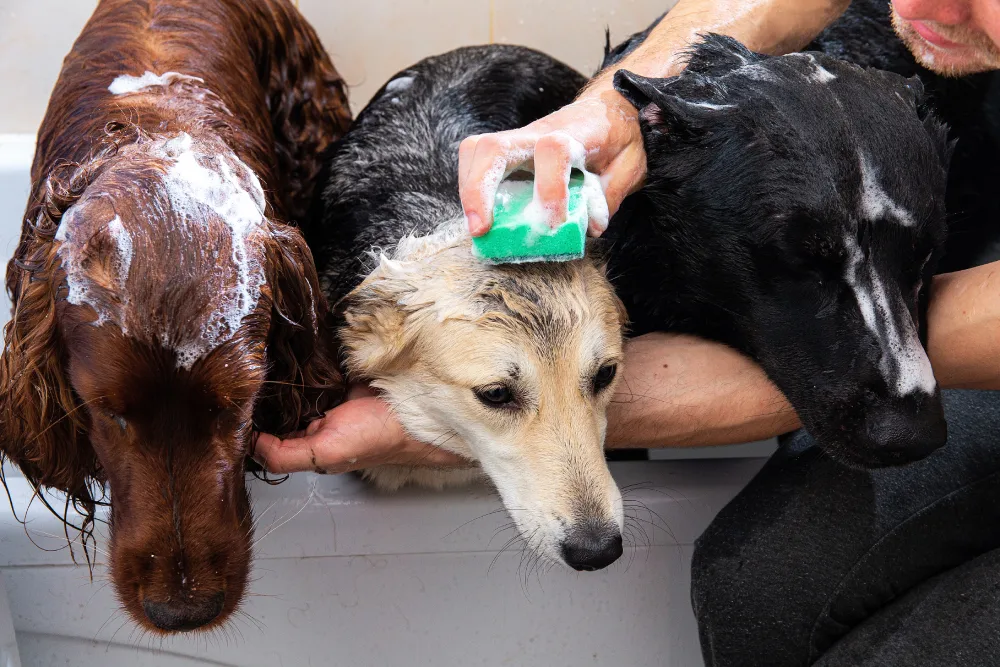
A healthy dog coat tells you everything is fine inside. But when something goes wrong, the fur shows it first. Ignoring these signs leads to vet bills, more itching, and one unhappy dog. Here are five clear signals your dog coat needs help right now. Plus simple fixes that actually work.
Sign 1: Greasy Fur That Leaves Marks on Your Hands
Pet your dog. Does your hand feel slick or oily afterwards? A little oil is normal. Greasy fur that leaves a film means trouble.
What is going on?
– Too much oil production – a condition called seborrhea
– Yeast or bacteria growing on the skin
– Hormone problems like low thyroid
– Cheap food with too much fat
- How to fix it
Grab a dog shampoo for sensitive skin made for oily coats. Oatmeal based or medicated ones with chlorhexidine work great. Wash once, rinse fully, then shampoo again. The second wash really cuts through the grease.
Sign 2: Nonstop Scratching That Drives Everyone Crazy
You see it every night. Scratch, scratch, scratch. Your dog cannot sleep, cannot eat, cannot relax. Excessive scratching in dogs is not normal. It is a cry for help.
| Trigger | What you will see |
| Food allergies | Itchy ears, paws, licking the floor |
| Seasonal allergies | Red belly, scratching after walks |
| Fleas | Tiny bumps near the tail |
| Dry skin | White flakes everywhere |
- How scratching ruins the dog coat
When itching in dogs lasts for days, the fur takes a beating. Scratching breaks hairs. Biting pulls out clumps. Licking creates wet mats that grow bacteria. Your dog goes from fluffy to patchy real fast.
- What actually helps
Try this:
– Give a bath with dog shampoo for sensitive skin with oatmeal – washes off pollen and soothes the burn
– Ask your vet about a leave on conditioner to repair the skin
– Use a vet approved antihistamine to stop the itch cycle
Sign 3: So Much Shedding You Could Make Another Dog
All dogs shed. But when fur comes out in clumps or you see bald spots, something is wrong. Learning to reduce dog shedding starts with finding the real cause.
Normal vs problem shedding
Normal shedding happens with the seasons. Problem shedding happens all year. You can see skin through the dog coat. Fur falls out in chunks. Your dog might have dandruff or red spots too.
- Why this happens
Dog skin health controls shedding. When skin is mad, hair follicles stop working. Common reasons:
– Not enough zinc – common in Huskies and northern breeds
– Cushing’s disease – older dogs get this
– Mites – tiny bugs you cannot see
– Thyroid trouble – very common
- How to reduce dog shedding naturally
Start with food. Add these:
– Fish oil – 1000mg per 30 pounds daily
– Cooked eggs – one a week for small dogs, three for big ones
– Pumpkin seeds – ground up, a little sprinkle on food
Then upgrade your brush. A high velocity dryer blows out loose fur better than any brush. Use it outside. Follow with an undercoat rake.
- When to see the vet
If shedding keeps going after one month of better food and grooming, get a blood test. Checking thyroid and cortisol catches many treatable problems.
Sign 4: Dull, Crumbly Fur That Snaps When You Pull
Healthy fur bends. Damaged fur breaks like dry spaghetti. Pull a few strands between your fingers. Do they snap? Your dog coat is in trouble. Most people think they need fancy products. But brittle fur usually means:
– Not enough protein – fur is made of protein
– Not enough water – skin needs hydration to grow hair
– Too many baths – washing more than every two weeks strips oils
– Human shampoo – the wrong pH ruins the dog coat
Quick fixes for better dog coat health
Try this weekly:
- Monday – Add a raw egg to dinner. Eggs have biotin that builds strong fur.
- Wednesday – Give bone broth as a topper. No onions or garlic.
- Friday – Use a rubber curry brush. Gets blood flowing to hair roots.
- Sunday – Check water intake. Most dogs need one cup per 20 pounds daily.
What products to buy
Look for dog shampoo for sensitive skin with aloe vera and vitamin E. Avoid alcohol, fake fragrance, and sulfates. Use a conditioner made for damaged fur after every bath.
# Sign 5: Red, Crusty, or Bumpy Skin Under All That Fur
Part the fur and look at the skin. See anything weird? Pink and smooth is healthy. Red, bumpy, or scaly means dog skin irritation has taken over. Most owners miss this because they never look underneath. Dog skin irritation loves to hide:
– Between the toes
– In armpits
– Under the collar
– Inside ear flaps
– On the belly
- How outdoor allergens on dogs cause this mess
Grass, pollen, and mold land on your dog during every walk. These outdoor allergens on dogs stick to fur and soak into skin. Within hours, sensitive dogs break out in red bumps. Then they scratch. Then bacteria get in. Now you have a real problem.
- The bath solution
A weekly bath washes outdoor allergens on dogs away before they cause trouble. Use cool water – hot water makes things worse. Lather up dog shampoo for sensitive skin and let it sit for five minutes. Rinse until the water runs totally clear. Soap left behind is a big irritant.
- Go to the vet now if you see
– Yellow or green crust – bacterial infection
– Black or brown patches – yeast overgrowth
– Oozing hot spots – serious skin infection
– Perfect circles of hair loss – ringworm fungus
These need prescription meds. Home remedies will not work.
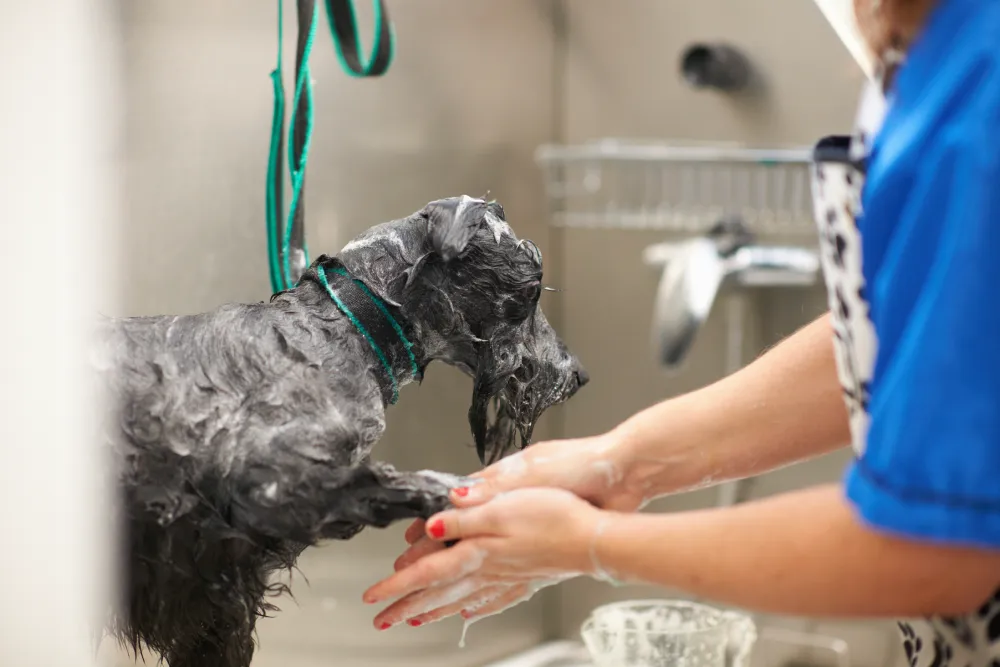
A Simple Dog Grooming Routine That Prevents All This Mess
You know the signs. Now build a dog grooming routine that stops problems before they start. It takes less time than you think.
- Every day – 5 minutes
– Run your hands all over your dog feeling for bumps or scabs
– Check eyes and ears for gunk or smell
– Wipe paws after walks to remove outdoor allergens on dogs
- Every week – 15 minutes
– Brush based on dog coat type – pin brush for long hair, rubber curry for short hair
– Look for dog skin irritation by parting fur in different spots
– Clean ears with vet solution
- Every month – 30 minutes
– Full bath with dog shampoo for sensitive skin
– Nail trim – if you hear clicking on floors, they are too long
– Teeth brushing for dogs – bad teeth hurt the whole body including skin
- Every 4 to 6 weeks
Sometimes you need backup. Grooming appointments at a salon or self-wash dog grooming stations give you high velocity dryers that remove deep fur you cannot get at home. Many owners do self-wash dog grooming for maintenance and professional grooming appointments twice a year for big deshedding jobs.
Self-Wash Dog Grooming vs Professional Grooming Services for Dogs
| Option | Best for | Cost |
| Self-wash dog grooming | Saving money, bonding time | $15–25 per bath |
| Grooming services for dogs | Hard coats, no time to do it yourself | $60–120 per session |
| Mobile grooming services for dogs | Anxious dogs, convenience | $80–150 per visit |
Signs Your Dog Needs a Bath Before the Coat Looks Bad
Do not wait until the dog coat is a mess. Watch for signs your dog needs a bath like:
– Your dog smells stronger than usual
– The fur feels gritty or dusty
– You see dandruff on their bed
– Your dog rubs on furniture a lot
– A dirty ring around the collar
Bathe every two to four weeks with dog shampoo for sensitive skin even when everything looks fine. Stopping problems is way easier than fixing them.
Frequently Asked Questions
How often should I bathe my dog for a healthy dog coat?
Most dogs need a bath every two to four weeks. Dogs with allergies might need weekly baths. Use dog shampoo for sensitive skin every time.
Can human shampoo hurt my dog’s coat?
Yes. Human shampoo has the wrong pH. It strips oils, causes dryness, and leads to dog skin irritation. Only use dog shampoo for sensitive skin.
What is the best way to reduce dog shedding?
Brush regularly, add fish oil to food, and use a high velocity dryer once a month. Shedding drops within four to six weeks.
How do I know if itching in dogs is allergies?
Allergy itching in dogs hits paws, ears, belly, and armpits. It follows seasons or food changes. Flea itching is at the tail base. Your vet can do a skin test.
Are outdoor allergens on dogs a problem all year?
Outdoor allergens on dogs are the worst spring through fall. Wiping paws and weekly baths help in every season.
What dog shampoo for sensitive skin do vets like?
Vets recommend Douxo S3 Calm, Virbac Epi-Soothe, and Dechra Miconahex Triz. Pick based on your dog’s specific needs.
How short should nails be for good dog coat health?
Nail trim every two to three weeks so nails do not touch the floor. Long nails change how your dog stands and walks, which affects exercise and dog coat health.
Does teeth brushing for dogs really affect the coat?
Yes. Dental disease spreads bacteria through the blood. This wears down the immune system so there is less energy for a healthy dog coat.
What happened at my first grooming services appointment?
Grooming services for dogs include bath, blow dry, brush out, nail trim, ear cleaning, and anal glands. Add teeth brushing for dogs as an extra.
How do I switch from self-wash dog grooming to professional care?
Start with self-washing dog grooming at home to get your dog used to handling and water. Then book a short pro visit for just a nail trim.
